Bitcoin
Affairs
 
No. 134  ยท  8 Oct 2026

Sponsored by

 
MARKET SNAPSHOT
BTC / USD
$82,546
  24H CHANGE
-0.6%
 
ALL-TIME HIGH
$124,749
  FROM ATH
-33.8%
โ—Ž
NEWS
5 STORIES TODAY

Solana's price collapsed. Its network didn't. Dormant wallets are waking up, inflation is falling, and Firedancer is rolling out. Stop guessing the bottom. Get our full thesis, metrics, and risks.

Sponsor
Quantum and AI wallet-risk warnings put bitcoin key exposure back in focus
Fresh security warnings put long-dated bitcoin wallet risk back on the agenda, with new reporting citing more than 6 million BTC behind already exposed public keys. No practical attack exists today, but Europol and market researchers are pushing the industry to improve wallet hygiene and start preparing for post-quantum migration paths.
On-chain  Regulation
Fed minutes keep December tightening risk alive as inflation worries broaden
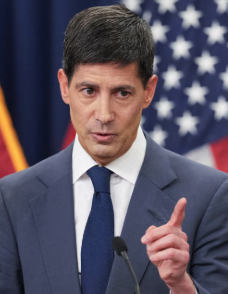
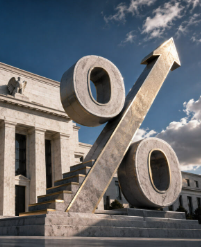
Minutes released on October 7 showed most Fed officials still saw another rate increase as likely by year-end, even as they stressed that future decisions depend on incoming data. The discussion highlighted upside inflation risks from energy, AI-related demand and other supply shocks, keeping the higher-for-longer rates backdrop intact for bitcoin and other risk assets.
Fed  Rates  Macro
U.S. spot bitcoin ETFs suffer their largest daily outflow in months
U.S. spot bitcoin ETFs recorded roughly $485 million to $487 million of net outflows on October 7, the biggest one-day withdrawal since late June. After strong September inflows, the reversal removes an important source of marginal demand just as bitcoin is trading under renewed macro pressure.
ETF  Macro
Riyadh airport attack threat deepens Middle East oil risk for bitcoin markets
Explosions were reported at Riyadhโ€™s airport on October 8, and the Houthis warned people to stay away from Saudi oil facilities as the conflict widened. For bitcoin, the key channel is oil: fresh supply-shock fears keep inflation expectations elevated and worsen the backdrop for risk assets.
Geopolitics  Macro
Treasury yields revisit 24-year highs as oil shock unsettles global risk assets
U.S. long-end yields pushed back toward multi-decade highs as oil surged above $100, reviving inflation anxiety across stocks and bonds. Even with some intraday stabilization, the rate backdrop remains a headwind for bitcoin by tightening financial conditions and supporting the dollar.
Rates  Macro
โ‰ก
COMMENTARY
VOICE FROM THE NETWORK

Sponsor

Solana Crashed 80%โ€”Hereโ€™s Why Weโ€™re Buying Now

Ten consecutive red monthly candles and the most oversold RSI in Solana history have created massive panic. But while the price collapsed, the underlying network didnโ€™t.ย 

Dormant wallets are waking up, application revenue is surging, stablecoin supply has climbed to fifteen billion dollars, and institutional ETF inflows remain strong. With new tokenomics reducing inflation and major infrastructure upgrades like Firedancer rolling out, the current range is a prime accumulation zone.ย 

Stop guessing where the market bottom is and get our complete breakdown of the thesis, metrics, and risks. Download our free guide today to see why we are accumulating SOL right now.

Crypto Rover
@cryptorover
View on ๐•
 
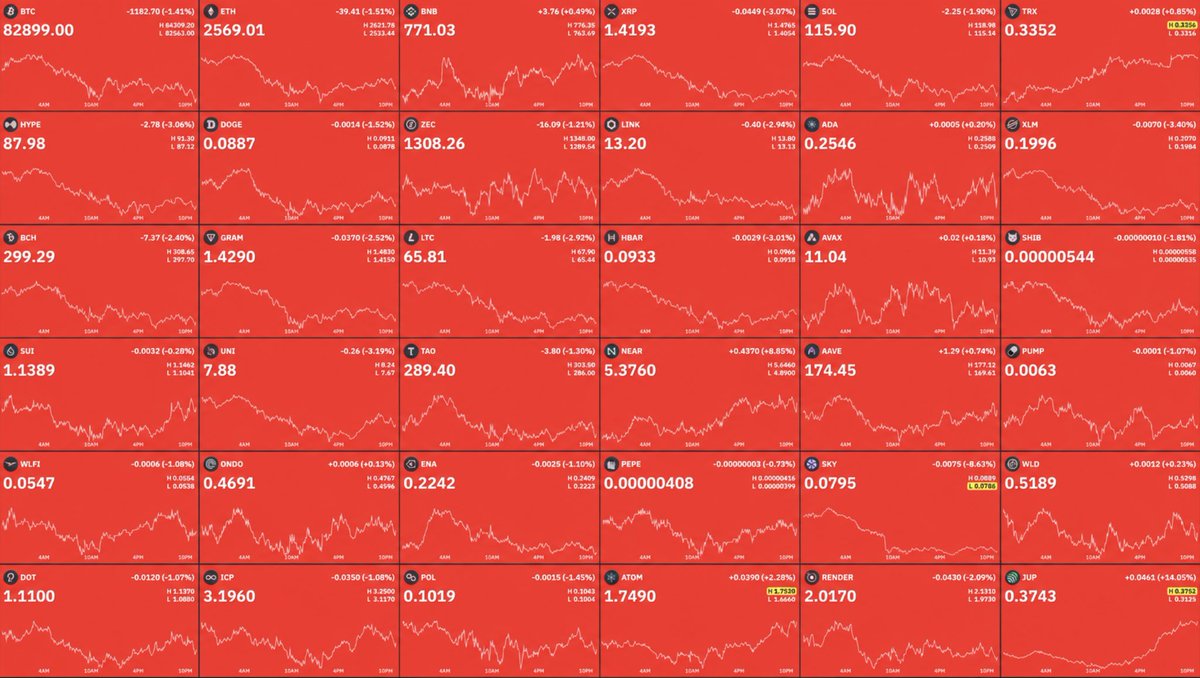
CRASH: Bitcoin hits a 7-day low as $100,000,000,000 is wiped from crypto amid fears AI could break its cryptography within months. https://t.co/K6cWSWHo8c


74 reposts    112 replies    801 likes
Justin Drake
@drakefjustin
View on ๐•
 
Today I call upon the blockchain industry to calmly begin planning for "bunker mode". My personal recommendation is to set in motion a controlled mass migration of assets to fresh addresses, i.e. addresses whose pubkeys remain hidden behind a hash.

Holders, starting with large and sophisticated ones, should consider moving the bulk of their funds to addresses that have never signed a transaction. And when they do sign one, they should also move remaining funds to a new address (possibly generated from the same seed phrase).

Don't rush. While I believe there is cause for action a rushed migration would do more harm than good. Don't panic either. Moving assets to protected addresses is a simple, preventative step which does not require new cryptography or new wallets.

IMO it is now reasonable to brace for the possibility that ECDSA breaks before qday, in the worst case in months not years. By "break" I mean fast private key recovery (e.g. in one week) on available hardware (e.g. a large GPU cluster).

Recent days have been humbling for human mathematical intuition. Long-held, unquestioned hypotheses have fallen. This includes the n log(n) bound for integer multiplication and the 3SUM conjecture. In hindsight, May's unexpected disproof of the Erdล‘s unit distance conjecture was our warning shot.

Yesterday's OpenAI drop made it clear that mathematical superintelligence is upon us. They say there are weeks where decades happen. We are about to live through weeks where centuries of mathematical progress happen. Could our magic 64-byte ECDSA signatures be too good to be true? Was it just security through obscurity all this time?

Elliptic curves feel especially vulnerable to superintelligence. Curves carry rich structure, with room for fancy tricks like Schoof, Frobenius, pairings. (By contrast, hashes are designed to minimise algebraic structure.)

Separately, as Ewin Tang can attest, an efficient quantum algorithm sometimes foreshadows an efficient classical one. We should be open to the possibility of a classical counterpart to Shor that breaks elliptic curves and RSA at once.

Also noteworthy is the striking under-representation of cryptographic breakthroughs among the 722 mathematical results OpenAI published. I've witnessed first-hand the US government censoring academic quantum cryptanalysis results. Backroom interventionism is my base case.

I urge large, sophisticated actors to lead by example. Project11's "risq list" (bitcoin-risq-list.projecteleven[.]com) is a great tracker of exposed BTC pubkeys. Binance, Bitbank, Robinhood, Bitfinex, and Tether have an opportunity to harden their cold storage. Next month I'll address institutions in London in a live Q&A (forum.ethereuminstitutional[.]org/london-2026).

Again, please do not rush. Wallets holding under 50 BTC enjoy partial cover from "Satoshi's shield", i.e. his 20K exposed addresses that hold 50 BTC each. Load-bearing signers like oracles and L2 security councils should consider rotating ECDSA pubkeys with every signed message and/or multi-signing with a hash-based schemes like SPHINCS.

Exiting bunker mode safely will require post-AI cryptography. My inclination is to go all-in on hash-based cryptography and avoid structured mathematical assumptions entirely, whether from curves, lattices, or isogenies. A single battle-tested hash (e.g. from the SHA or BLAKE families) yields plausible post-AI security.

The Ethereum roadmap on strawmap[.]org fully embraces hash-based cryptography with end-to-end formal verification as a response to the quantum threat. Those timelines must now be revisited and accelerated in light of mathematical superintelligence. I'll be pushing for maximum defensive acceleration.


2.0K reposts    1.3K replies    14.9K likes
Praetor
@FourVork
View on ๐•
 
TL;DR for people who don't know cryptography:

Every Bitcoin wallet has a public key and a private key.

Your private key lets you spend your BTC, so it's known only to you.

Your public key is used for receiving btc. BTC relies on elliptic-curve cryptography to protect private keys.

Public key can be visible when transacting, because with today's math, deriving private key from public key is effectively impossible.

Drake is worried AI could discover a mathematical shortcut that changes that.

If that happens, anyone whose public key is already exposed (early btc transactions exposed it) could have their coins stolen.

That's why he's telling people to move funds to fresh addresses whose public keys are still hidden, and rotate addresses after spending.

Interestingly, most of Satoshi's BTC already has its public keys exposed, so it will be the first target for the attack :)


60 reposts    39 replies    804 likes
vitalik.eth
@VitalikButerin
View on ๐•
 
I don't recommend anyone scramble to move their funds to new wallets today. But we should take the risks to cryptography from AI-accelerated math seriously, and minimize our exposure to not just quantum-vulnerable cryptography, but also potentially AI-vulnerable cryptography.

The core new area of risk from this viewpoint is, unfortunately, ML-DSA / FHE / lattices.

(and it's also another reason, along with quantum, why ECDSA might fall even faster than expected, hence the "fresh address" recommendation)

So far most people have been in the mode of thinking "elliptic curves broken, hashes safe, lattices safe". But there is a good chance that the concrete security of lattices will take serious hits from the next two years of AI math.

The basic threat model is: factoring is something that naively takes 2^(n/2) time, but over decades smart people have found and optimized number field sieves, and degraded that to 2^O(n^(1/3)), which is why RSA keys and signatures need to be ~400 bytes (and not 64 bytes). What if there are skeletons in the closet like that, both for elliptic curves and lattices, that we are simply not smart enough to discover - but bots soon will be?

This is a major part of the reason why for the past year ethereum's lean roadmap has been going in the "hash-only" direction: no lattices, no ML-DSA, no Falcon, no lattice-based commitments inside ZK proofs, etc. Signatures in lean ethereum are all hash-based, either WOTS or SPHINCS-.

For signatures and proofs, we already know how to go hash-only. The bigger challenge is for *public-key encryption* - and this goes far beyond blockchains. Secure communication, anonymizing protocols, lots of things need public-key encryption.

And unfortunately there are long-standing mathematical theorems showing why public-key encryption cannot be done with hashes alone. You have to have some kind of trapdoor object that has at least one form of usable "structure" - either group theory (incl. isogenies) or lattices or code-based or potentially in the future even more newfangled and spooky things (local mixing?). But for anything that has structure, you should assume that AI will make at least some progress in breaking that structure. Here, one reasonable inference is that if you want to make something plausibly long-term secure, multiply the key sizes by 10.

To me that's a very plausible world and something not at all extreme to predict. If AI will bring us 50 years of math in 2 years, then that 50 years of math may very plausibly include a "naive factoring -> GNFS" level of improvement to our ability to break lattices. In that world, lattices will still exist, but they will have to be significantly bigger to guarantee the same level of safety.

And at those new larger sizes, hash-based constructions will beat lattice-based constructions on concrete efficiency in every use case where hash-based constructions are possible at all.

Theoretically, of course it's possible that hashes are broken too (eg. P = NP would imply that). But I think P = NP is very unlikely. And intuitively, it's much more likely that a mathematical object has exactly no exploitable structure (like hashes are intended to), than that a mathematical object has exactly ~3 forms of exploitable structure (for elliptic curves: associativity, Schoof, pairings) and not some secret fourth form of structure we have not yet discovered that greatly degrades its security (for elliptic curves, ECDLP and pairing security). Similar for LWE, SVP, RLWE and the zoo of lattice problems.

For this reason, we do not yet see any reason to worry and start padding the byte size of hashes (if we start to worry more, we would pad the round count first before doing anything to the byte size).

Concrete TLDR, my own personal views:

* Hash-based > lattice-based, in those situations where hash-based is possible at all
* For anything lattice-based, be much more paranoid on param sizes. Remember that blockchains are only a small portion of the cryptography story; this point goes far beyond blockchains and applies to eg. access to websites, secure messaging, Tor / VPNs ...
* For privacy protocols, strongly favor NOT putting encrypted notes onchain. Instead, send them offchain through some third-party mechanism.
* If it's not difficult for you, keeping your funds in addresses which have not yet been used to make a transaction is a good idea. If it's easy for you, do it. **But be careful about migrations; I personally have lost more money in botched migrations than I have lost in all hacks combined**.
* For multisig wallets, doing confirmations offchain is better than onchain, because this way the signatures of signer wallets do not get exposed to the public, so if ECDSA falls to AI much faster than expected, at least the multisig "gracefully degrades" to a 1-of-1 where the 1 is whoever was gathering the signatures - a much better place to be than "anyone can take the money"
https://t.co/oVjwZog2lL


1.3K reposts    803 replies    7.3K likes
Atum
@DefiApes
View on ๐•
 
I just sold all my crypto

Iโ€™m not gonna be the idiot that watched AI decompile and solve code as we know it and not think itโ€™ll have an effect on digital money

Happy to be wrong and buy back later but feels like Russian roulette


28 reposts    228 replies    505 likes
Coin Bureau
@coinbureau
View on ๐•
 
๐ŸšจFED MINUTES: ALL 19 Fed officials BACKED a 25bp RATE HIKE in September.

Most officials also said ANOTHER rate increase would likely be appropriate by YEAR-END.

Almost all saw inflation risks tilted to the upside, with some warning the AI investment boom could push demand beyond supply and add further price pressure.

The Fed also sees the labor market near full employment, while financial conditions remain supportive despite higher Treasury yields.


82 reposts    48 replies    492 likes